Roguelites: CloverPit
This is likely going to be one of the more critical posts I write because to put it upfront: I really did not like the design of CloverPit.
And no, it's not because it's a slot machine roguelite. I've seen enough posts on social media getting angry about it because it's gambling and bad and so forth. Those folks desperately need to touch grass and kindly shut the hell up.
Anyways, despite CloverPit having the aesthetics of a slot machine in reality the game is almost deterministic to a fault. It's remarkably easy to break which isn't always a bad thing in a roguelite, but the way you engage with the systems and the scaffolding built around the slot machine make it a dreadful experience the more you play and optimize it.
(don't) Pull The Lever
With games like CloverPit I like to think about the design of the game in two separate parts: The 'core' of the game and then the 'scaffolding'. Balatro for example uses poker as the core, and then builds up a system of jokers, deck manipulation and score attack mechanics for the rest of the game.
The core of CloverPit is, obviously, the slot machine. You have a set of symbols (from Lemon to Seven) and a set of patterns (from HOR to Jackpot). The symbols each have a base value and probability, patterns provide the multipliers. Symbols can also have modifiers, with certain symbols having weights towards certain modifiers (this is what dictates your build, sort of like poker hands in Balatro). There's also the chance of rolling a 666 as you get further in the game which can blow out your earned income. Besides that, your goal is simple: Earn enough money from the slot machine to pay down your evergrowing debt and beat each deadline.
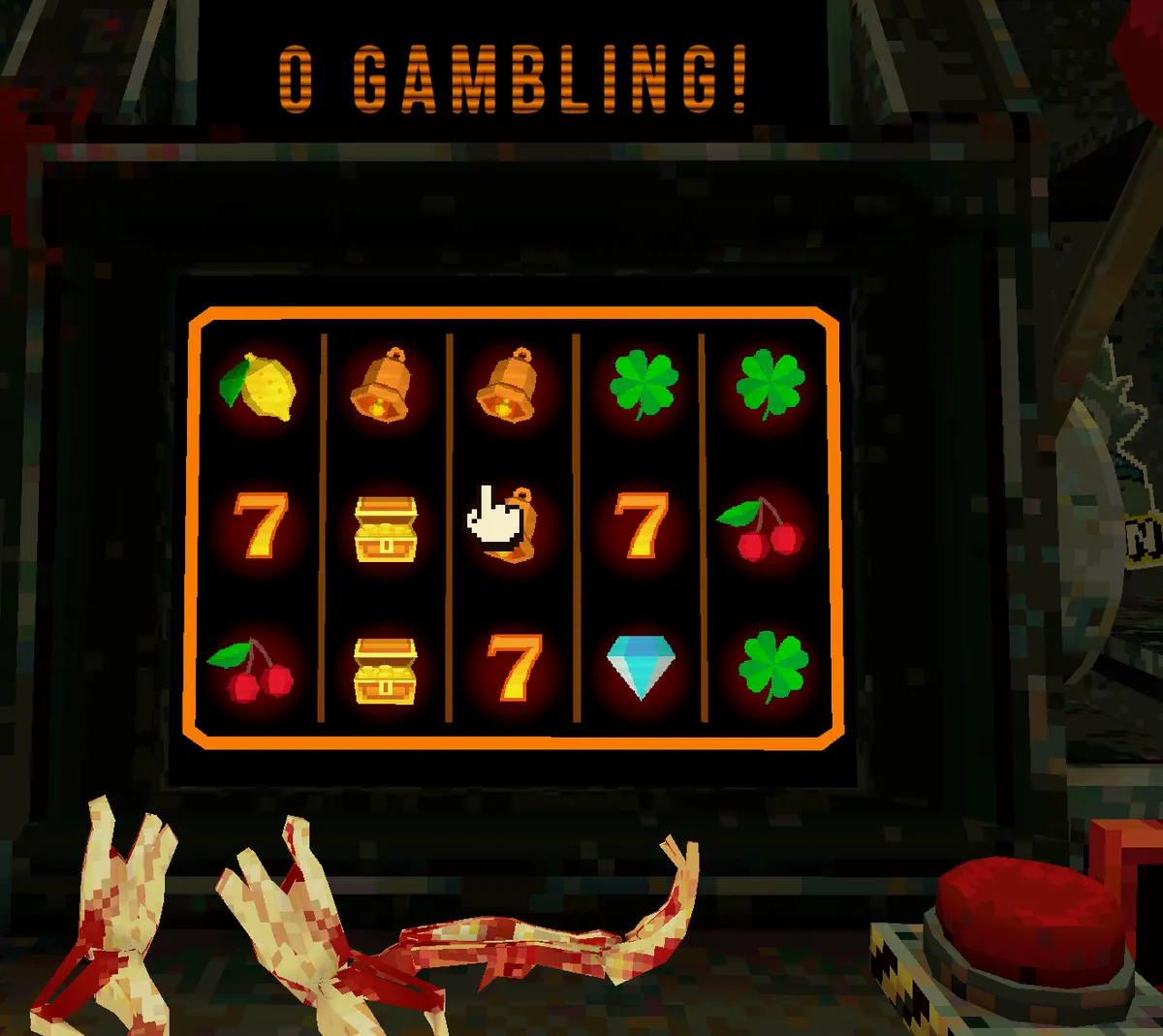
(the ever-present slot machine itself)
The scaffolding is where all of the actual interesting things happen. You can buy an assortment of lucky charms which can do things like giving you additional rolls, increasing your luck for the final pull of a round or triggered abilities you can press by using a button. These can be purchased with tickets and rerolled with gold; with a limit of 7 at the start. Additionally every deadline beat causes the phone to ring, which gives you three perks to choose from which can change symbol weight, give tickets and more.
There's a few other mechanics I'm not going to list here because they don't have an impact on my mechanical issues with the game. Oh and there's metaprogression in that you're unlocking new charms and additional game modes and charm storage.
Management is (always) the issue
Lucky Charms compose the majority of your interactions with the game and managing them is key to winning. That management however is exactly the issue with the game. You can gradually unlock drawers which is an additional space for you to store extra lucky charms. As long as you're not currently rolling the slots, you can shove charms in there.
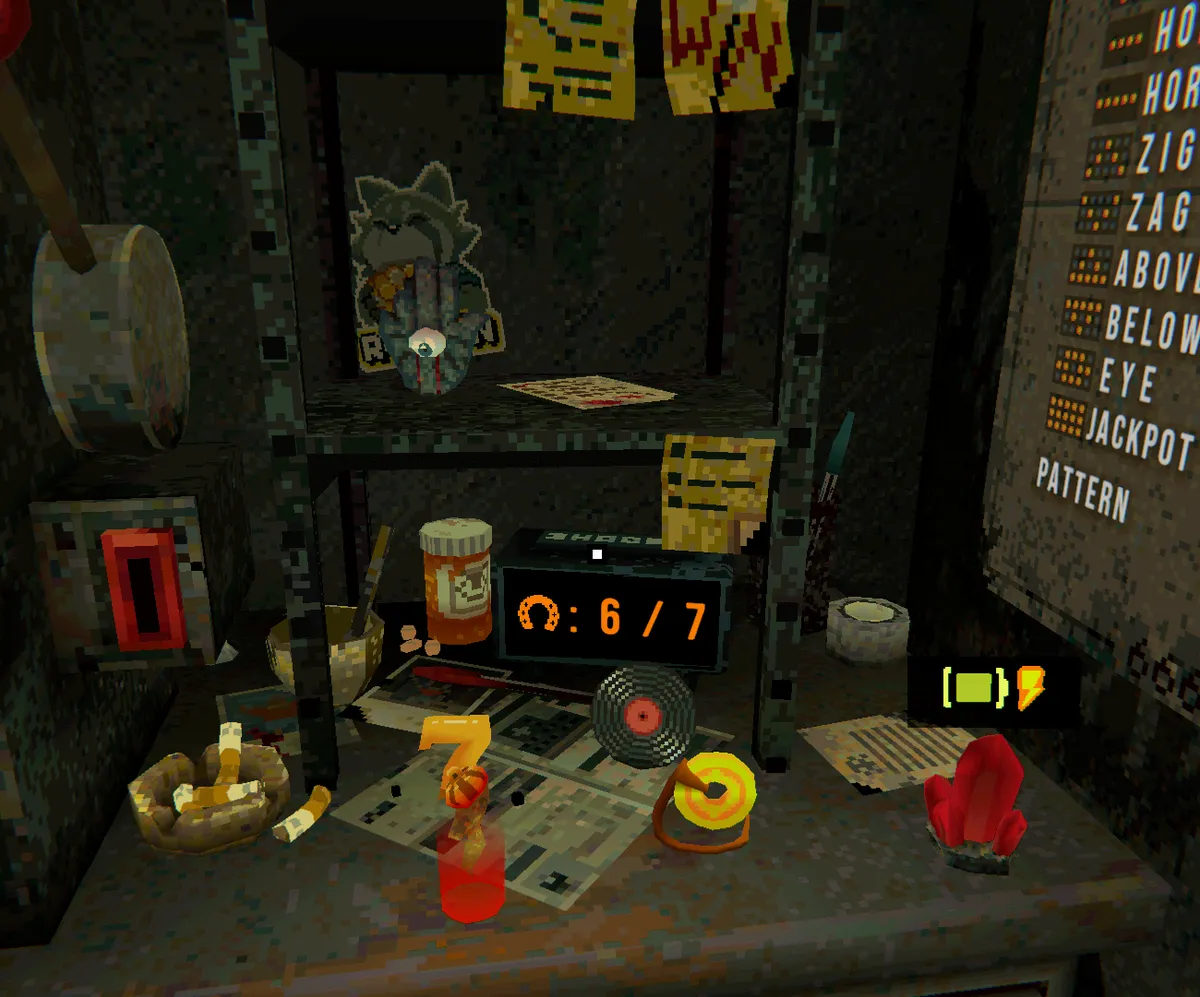
(a bad set of charms that definitely did not win me the game)
The 'optimal' way of playing involves you learning how to juggle. You're quickly swapping charms in and out of the drawer, holding onto consumable charms for the right time or stacking triggerable charms for extra long rounds. There's a fair number of charms that will reduce your active space while they're equipped too, so the late game can become trying to shuffle things around in drawers awkwardly to maximize charms on the table. This gives you a high degree of control over what charms you use and why but in turn, the game ends up being 90% prep and 10% actual play.
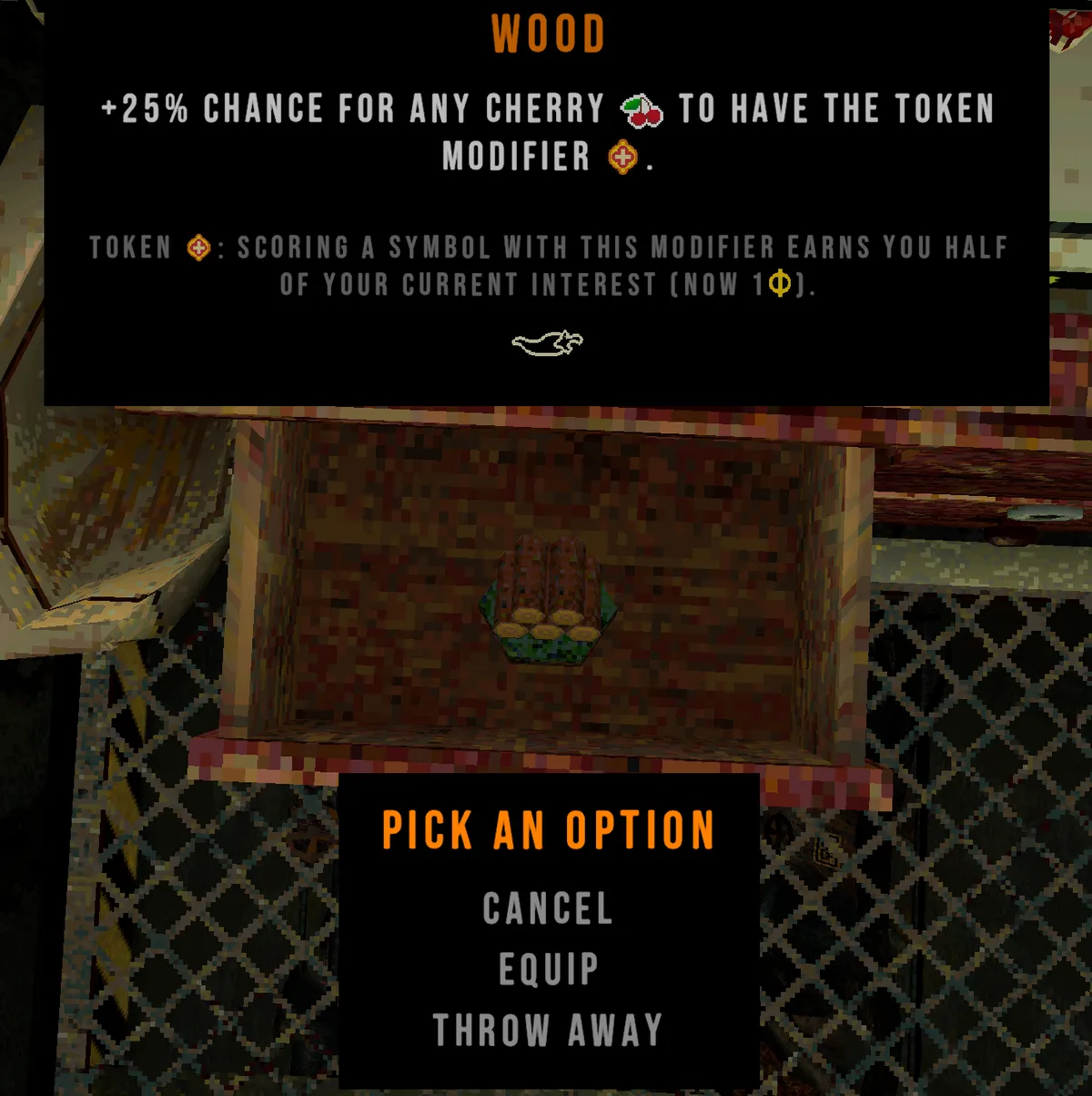
(drawers being the bane of my existence both in-game and irl)
This system has to work this way because the ways you can interact with a slot machine are fundamentally limited. In Balatro while you're restricted to holding 5 jokers at a time (ignoring negative jokers for a moment), you have a wider range of plays for each hand. You might be a two-pair build, but have a straight flush which is higher value. You might start clearing out one color from your deck to play for flushes as a backup, you have discards for fishing for specific cards. That said, Balatro does have similar issues; it just does a better job at hiding them or managing them.
Pulling the lever could be seen as analogous to picking your hand and sending it in Balatro, but in Balatro you know the outcome of the hand you're about to send and can even manipulate it before you send it. The closest thing CloverPit has to this is the ability to choose when you use active items; so you can save them for when a bunch of passives trigger at once but it still feels far more limited.
It feels strange to write that because you would think this would mean CloverPit is entirely subject to RNG, but it's not. Once you understand how to manipulate charms and stack the odds in your favor, it is startling easy to consistently win.
It's the Economy (Stupid)
CloverPit has a two-prong economy: Gold and Tickets. Gold serves as the amount you need to hit the deadline and a way to reroll charms, Tickets serves as the way to buy Lucky Charms. And the econ in Cloverpit is utterly broken as a result.
If you can beat a deadline multiple times over (which isn't a hard feat to do), you can effectively reroll the store for nearly-forever. And the game even rewards you for snowballing by giving out a deadline bonus if you can complete it early. Rounds can quickly become a matter of rerolling over and over again looking for the most synergistic charm for your current build. The more you win big, the more charms you can reroll and the bigger you can win.
There are harder and more difficult modes which adjust the econ a bit, but I think it's a fundamental issue with having two separate currencies. Or at least an issue with how they're balanced.
Let's (not) Go Gambling
Some final bits of rambling as per my style:
I went back and replayed a bit of CloverPit while I was in the middle of writing this post to see if my thoughts still held up or if I was just being sour, but I think my complaints still remain. I have not bought or played the DLC so I could not tell you if it manages to solve these issues.
There's a specific set of charms that I remembered disliking when I booted up the game, and it's charms specifically for buffing phone choices. Things like giving you additional buffs when you pick up the phone or doubling said buffs. These are annoying because the ideal play is to keep them in the drawer until you complete a round, then shuffle your charms around, pick up the phone, choose your buff and then shuffle your charms back in order. These buffs are potent enough that it's worthwhile doing and it's a way to use said drawers for multiplicative gains. You can't buy charms to immediately put away either, gotta throw a charm in the box, buy it, then swap charms around.
I did not unlock all of the charms or fully 100% the game (I did get the base skeleton key ending) and the game does have a fair amount of unlockable stuff to grab. Most of which tends to fall into specific archetypes (chance at X modifier for Y symbol) unfortunately.
CloverPit is towards the bottom of my personal rankings of roguelites because it only got worse the more I understood the systems and how to break the game. A massive dealbreaker for this genre where it gradually unfolds and expands in design. It's certainly not the worst one I've played, but a disappointment nonetheless.